

Last year's top CUPPIE honor, selected from 405 submissions, went to the launch video for the Edelman Fossil Park & Museum of Rowan University , created in partnership with Narrative Media. The film captures the wonder of a place where children can encounter science firsthand, researchers can continue to make discoveries, and Rowan can tell a larger story about its ambitions as an institution. As CUPRAP prepares to open this year's CUPPIE Award season, we asked the team behind last year's Best of Show to take us behind the scenes—and share what made both the work and the partnership successful. What story did you most want audiences to take away from the museum? For Narrative Media, the starting point was a simple question: Why should people care? The answer was both emotional and strategic. The team wanted to capture the excitement of young people encountering science and discovery while also conveying what the Fossil Park represents for Rowan: a distinctive destination that can attract visitors, scholars and supporters, and contribute to the University's broader aspirations. "Our visuals of kids excitedly exploring the museum helped to tell that story," said Andrew Poag of Narrative Media. Knowing the audience also helped determine how much of the story to tell. Rather than diving deeply into the science, the team sought to "pique their curiosity, whet their appetite, and leave them with just enough information to get them interested in visiting for themselves." What made the client-agency partnership work? Ask both sides, and the answers sound remarkably similar: time, trust, and a willingness to push each other. Narrative Media and Rowan have worked together for more than a decade. From Rowan's perspective, that history means Narrative understands not just the institution's goals, but its voice and culture. "[Andrew] has learned about the institution with each assignment and helped us develop a video storytelling style and voice that fits Rowan well," Joe Cardona, vice chancellor for University Communication at Rowan shared. "In planning stages, he listens well and returns to us with creative options that we can run with." For Poag, that history has created room to take creative risks. "When we first started working together, our projects were of a more limited scope, but as the relationship grew Rowan was more willing to take some risks and try things that we and they hadn't done before," he said. The result has been increasingly ambitious work—and a partnership in which both sides feel invested in the outcome. What should institutions look for in a creative partner—and vice versa? Rowan's advice is to find partners who respect the expertise that already exists within an institution but aren't afraid to challenge it. "We look for creative pros who've done their homework and respect our knowledge but still know how and where to push us out of our comfort zone to do something we couldn't have imagined," Marshall said. Poag offers similar advice to clients: make room for new ideas. "If you can let go of a little bit of control and allow room for fresh perspectives, it can do wonders for your work." He also cautions against underestimating the time and resources required to make work stand out. Preparation, production and polish all matter—particularly in a media environment overflowing with content. What's one lesson you'll take from the project? For Poag, it's the value of time—especially time that creates room for the unexpected. The production devoted a full day to filming children and families in the museum. That allowed the team to carefully capture what they had planned, but it also created room to experiment. One memorable shot through a dinosaur's mouth toward a family below wasn't on the original shot list. With time to play with the idea, the crew grabbed a ladder and made it happen. And one of the most meaningful outcomes wasn't captured on camera at all. After the shoot, Jarell, a young boy featured handling dinosaur bones and running up the museum stairs, sent Poag a letter thanking him and telling him how much fun he'd had. Poag wrote back, beginning a correspondence between the two. "It was incredibly heartwarming to find out that we made his time with us a positive experience," Poag said. "His letter was the best reward for this project." The CUPPIE was a pretty good one, too. Information about the 2027 CUPPIE Awards and the entry process will be made available in late September 2026.
May 12, 2026 Carina Sitkus, Associate Vice President, Content, Lehigh University Audra Berner, Executive Director of Content Distribution, Lehigh University Kristen DiPrinzio, Director of University Communications, Lehigh University Lindsay Lebresco, Executive Director of Content Creation, Lehigh University Launching a brand is a pivotal moment for any institution—but the real work begins when teams across campus bring that brand to life consistently and collaboratively. For our content team within University Communications and Public Affairs at Lehigh University, that meant developing a content strategy in alignment with Lehigh’s new brand that could unite more than 100 communicators and marketers around a shared approach to storytelling. A core part of that strategy was the introduction of annual content themes: strategic story lenses designed to guide narrative priorities across the university. These themes help ensure our audiences walk away with the understanding of who Lehigh is and what differentiates us, while giving creators across campus a common framework to work from. Below are the key considerations incorporated into the strategy we created and the lessons we believe other institutions can apply to their own work. 1. Framing the Strategy: Creating a Shared Narrative Framework Why Themes Became the Foundation We developed a set of annual themes designed to flex with emerging institutional priorities, key initiatives, and societal conversations. They are refreshed every year. Together with our brand pillars, which are evergreen and speak to topics such as academic excellence and student success, these themes (contact communications@lehigh.edu for the annual themes) keep our storytelling aligned across the university while still allowing for creative variation and timely content. Building Governance That Could Scale To make the strategy operational, we knew governance had to be built in from the start. Our approach included: Cross-functional planning groups between central communications and advancement Regular collaborative meetings with colleges and key offices A two-way system for content sharing and amplification A shared vocabulary that allows teams to quickly align on audience, purpose, and thematic fit The result is a repeatable process where content creators and strategic leaders can decide together: What story should we tell? Who should tell it? And for which audience? For institutions with decentralized communications teams, this type of structure is essential. It provides clarity without limiting creativity, and it ensures that the symphony of storytelling across the university is aligned and can scale into institutional impact. 2. Using Analytics to Inform Decisions and Improve Outcomes Building Our First Thematic Analytics Framework One of the biggest challenges in higher ed content strategy is connecting strategic intent with real performance data. To address this, we implemented a new analytics framework that ties every piece of content to its associated theme and/or brand pillar. This allows us to measure: Volume of content produced per theme/pillar Views, engaged sessions, and engagement rate Comparative performance between themed content and all content Which themes/pillars resonate most strongly with audiences Gaps where strategy and content output aren’t yet aligned Key Insights From Our First Benchmark Year Several insights emerged that changed how we think about content alignment: High-performing stories often aligned with brand pillars, even when they weren’t intentionally crafted with strategy in mind. Only a fraction of stories aligned with annual themes—an indicator that editorial habits take time to evolve. Some stories performed exceptionally well because of SEO and topical relevance rather than strategic alignment—reinforcing the need for early integration of search strategy. Analytics surfaced opportunities to standardize tagging across decentralized websites so performance data can be aggregated more effectively. For others building a content strategy, your first year of analytics isn’t about perfection; it’s about building a baseline that allows for smarter decisions next year. 3. Opening the Strategy to the Full MarComm Community A University-Wide Co-Creation Model Once the initial governance structures were in place, we expanded theme development into a university-wide collaborative process. We began with a seed set of ideas from our central content team, then invited communicators across admissions, colleges, advancement, and other units to submit their own theme concepts. A cross-functional leadership group synthesized these submissions and moved forward a refined set of themes for broader input and selection. This process had two goals: Shared ownership: ensuring this was the university’s content strategy, not just one office’s. Collective clarity: enabling communicators to see how their work fits into a larger narrative. 4. Lessons Learned: What Others Can Apply to Their Strategy Work 1. Governance is the unsung hero of strategic storytelling. Without a shared structure, even the best strategy struggles to take hold. 2. Analytics must evolve with the strategy. Your first year of measurement won’t answer every question, but it will illuminate the right next questions and guide future actions. 3. Co-creation builds commitment. When communicators across the institution help define the strategy, they naturally help implement and advance it. 4. Themes are guides, not constraints; they are intentionally flexible umbrellas designed to encompass a wide range of topics that reflect institutional priorities. The goal isn’t uniformity, but clarity: themes provide direction to creators while still allowing room for creativity and innovation. 5. Distribution is as strategic as creation. A strong story with weak distribution rarely achieves institutional impact. Teams must think end-to-end. The success of a content strategy is not defined by its documents, frameworks, or dashboards—it’s defined by how well people across an institution can activate it together. For us, building our content strategy from scratch was as much a culture project as it was a content project. The frameworks, governance, and analytics helped. But the real momentum came from inviting our full communications community into the process and empowering them to shape the storytelling future of the institution. For institutions looking to build or refine their content strategy, our encouragement is simple: Start with alignment, build structures that last, and trust your community to bring the strategy to life.
March 20, 2026 Franklin & Marshall College student Sekou Cherif ’26 was named the 2026 CUPRAP Student Catalyst Fellow, a recognition of exceptional promise by an undergraduate in writing, social media engagement, video and audio production, graphic design, journalism, and related fields. Cherif, a film and media arts major and economics minor, was praised for his creative portfolio, with particular attention received for short films he created in his F&M coursework and for Drama Club NYC, a nonprofit focused on improv programming for formerly incarcerated youth. He is the first F&M student to receive the award in the organization’s 46-year history. He was honored at CUPRAP’s annual conference, held in F&M’s home city of Lancaster, March 11-13. “ When I received [the fellowship], I thought it’d be a great opportunity to engage with professionals,” said Cherif, reflecting on the news he was selected as this year’s fellow and that he’d be attending the conference. “It came at a fitting time, as a senior looking at prospective careers. It’s a great position to be in, because now I have all these new connections from colleges and different marketing agencies.” Keep reading.
February 5, 2026 Higher ed marketing and communications often comes down to one deceptively hard job: getting people to “play nice in the sandbox.” In a recent CUPRAP webinar, leaders from Swarthmore College shared practical case studies on how their teams improved collaboration across Communications, Admissions, Advancement, and the Provost’s Office—while also rolling out a major institutional rebrand. Their message was refreshingly concrete: collaboration isn’t a vibe. It’s infrastructure. When you build the right systems, partners don’t have to “try harder” to work well together—the process pulls everyone into alignment. Here are the key takeaways—and how you can apply them at your institution. 1. Stop hoping for collaboration. Build a system that produces it. Swarthmore’s biggest wins didn’t come from better intentions or more meetings. They came from creating repeatable structures: Clear intake pathways (forms, single points of contact within their office and campus partners) Shared timelines and expectations Templates for partners to use without going rogue Cross-team roles designed specifically to bridge gaps Takeaway: If your work depends on collaboration, don’t leave it to personality. Design it into the workflow and job descriptions. 2. Faculty storytelling needs a pipeline, not a pile of emails. Swarthmore’s communications team identified a familiar challenge: important faculty achievements were sometimes missed—not due to lack of care, but because there wasn’t a reliable way to flag what mattered most. Emails arrived inconsistently, details were incomplete, and communicators couldn’t be experts in every discipline. What they changed They rebuilt faculty news promotion with two key moves: Faculty Spotlight (launched) A dedicated, magazine-style faculty feature experience on the website, built to showcase the breadth of scholarship and teaching. Faculty were selected in consultation with the Provost’s Office, and the content was created for repurposing across web, social, and alumni publications. Faculty Submission Form (in development at time of webinar) A structured submission process embedded in their CMS (Drupal), designed to replace scattered emails with consistent data capture. The goal: make it easy for faculty to submit news, make it easier for comms to triage impact, and increase the team’s ability to say “yes” to more coverage —even if some items aren’t full story-worthy. What made it work The Provost’s Office wasn’t just consulted—it was positioned as a co-owner and advocate, which is essential for adoption. Budgeting included freelance support for writing capacity. ITS support was required for a workable technical workflow. The team was realistic about the hidden bottleneck: scheduling and producing photography. Takeaway: The fix isn’t “ask faculty to email us.” The fix is a pipeline that captures the right info, flags impact, and supports different content formats. 3. Event branding isn’t decoration—it’s trust, clarity, and performance. For Advancement, Swarthmore focused on Alumni Weekend as a flagship rebrand opportunity—an event already filled with joy, emotion, and identity. Why that mattered: new visual systems can trigger skepticism, especially among loyal audiences. But a celebratory event provides a natural opportunity to introduce change in a way that feels welcoming. Why branding mattered (beyond aesthetics) Swarthmore highlighted practical benefits that resonate across institutions: Unified narrative: consistent design makes varied stories feel connected Trust & credibility: well-designed communications reduce skepticism and confusion in an era of scams/phishing Recognition: alumni can instantly identify official event messages in a crowded inbox/feed Stronger experience: a coherent brand environment elevates engagement and belonging Improved performance: better design and consistency correlated with improved email metrics and event attendance A smart language move In some environments, “branding” can be a loaded term. Swarthmore initially framed their approach as “institutional visual storytelling” to reduce resistance and keep stakeholders engaged. Process mattered as much as design They used rebranding as an opportunity to reset timelines and expectations: Email planning with an ideal multi-week runway for drafting, review, approvals, and final checks Print planning with longer lead times due to vendor dependencies Takeaway: Branding becomes easier to defend when you connect it to trust, recognition, and measurable performance—not just visuals. 4. If a relationship is strained, treat the relationship as the project. One of the most resonant moments of the webinar was a candid look at a previously strained relationship between Communications and Admissions. What they heard: From Admissions: “I waited until the last minute so you couldn’t tell me no.” From Comms: “Admissions is the problem child—good luck.” They named what many teams experience: when trust erodes, people work around each other. And that damages outcomes. What changed everything They didn’t just “collaborate more.” They changed the structure: Leadership from the very top (the Dean and VP of Communications) was committed to improving this relationship and understood its impact on the College’s bottom line A dedicated Admissions communications lead became the single intake point for all communications projects going through the Admissions Office Intake was built into Admissions’ system (Slate) and routed into Comms’ project workflow (Wrike) Teams were intentionally embedded: Comms attended Admissions weekly meetings and retreats Admissions comms lead participated in Comms retreats and professional development Monthly leadership touchpoints between both offices kept priorities aligned The empathy insight that mattered They surfaced a root cause: people in Admissions were asked to do communications work without it being in their job description or skill set. Naming that created space for empathy and justified the staffing change. The results they credited Stronger coordination through major disruptions (FAFSA delays, SCOTUS decision) Higher morale and smoother execution Recognition from senior leadership Admissions became a high-trust, high-priority partnership instead of a friction point Takeaway: When the partnership is broken, your next campaign won’t fix it. Your operating model will. 5. “Easy wins” that scale into culture change Swarthmore’s recommendations weren’t flashy—but they’re the kinds of moves that compound: Create partner-friendly templates (flyers, posters, email modules) Establish lead-time norms for video, web, and email requests Build a simplified style guide for non-designers Maintain regular leadership alignment Invest in rapport: informal connection builds the trust that makes hard feedback possible Takeaway: If you want fewer last-minute requests, you need more clarity, easier tools, and a process people can follow without friction. Final thought: Collaboration is built, not wished for. Swarthmore’s “sandbox strategies” weren’t about perfect harmony. They were about building roles, systems, and shared expectations that make collaboration the default. If your institution is navigating rebranding, partnership challenges, or capacity constraints, this webinar offered a powerful reminder: You don’t need everyone to agree. You need a process that helps everyone move. Want to implement one thing this month? Pick one: Build a structured intake form for a recurring content need Create a simplified style guide for partners Establish a standard lead time policy for major deliverables Formalize a single point of contact for a high-impact partner office Small infrastructure changes can create outsized results. Members can watch the recording of this CUPRAP webinar with Swarthmore by logging in.
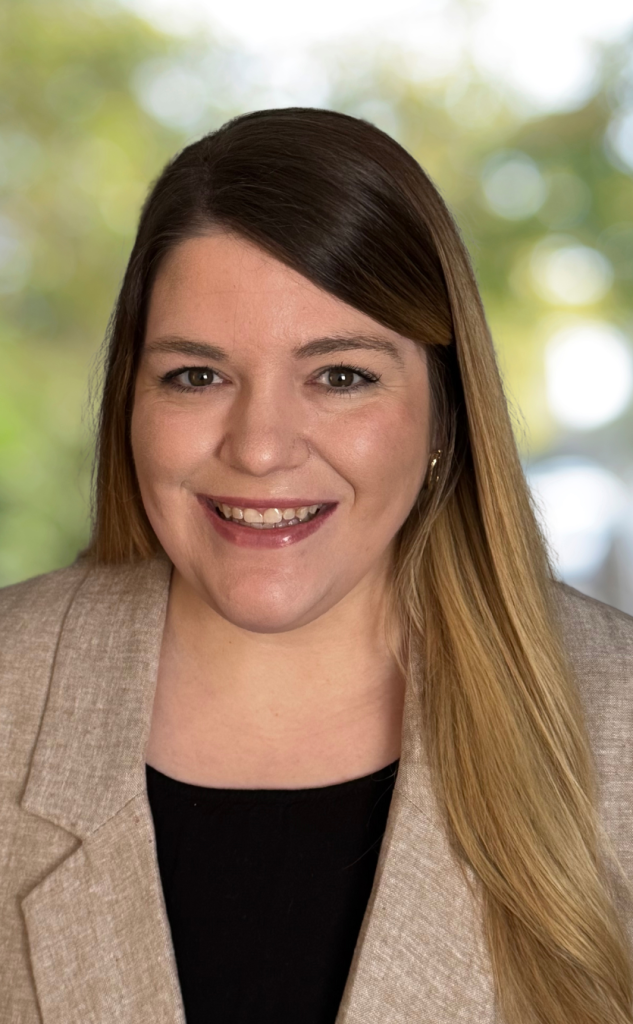
CUPRAP is thrilled to welcome Sarah Alice Keiser as our new Executive Director! With more than a decade of experience managing nonprofit programs and member-driven associations, Sarah brings a unique blend of strategic organization, relationship-building, and creativity to this role. To help members get to know her better, the CUPRAP Board of Directors sat down with Sarah Alice for a candid Q&A about her background, leadership approach, and vision for CUPRAP’s future. From community-building to conference planning, she shares what inspires her and how she plans to build on CUPRAP’s strong foundation of connection and collaboration. She’s passionate about strengthening professional communities and helping mission-driven organizations thrive. Get to know Sarah Alice below! Background and Experience You’ve spent over a decade managing nonprofit programs and member-driven associations. Which past experience do you think most prepared you for your new role with CUPRAP?All of my past experience has given me a unique perspective and skill set in association management, stakeholder engagement, and relationship building. I don’t think I can pinpoint one specific role — it’s really been the combination of all the interesting challenges I’ve faced, especially through the pivots required to survive during the pandemic, that have honed my skills....
The post Meet Sarah Alice Keiser, CUPRAP’s New Executive Director appeared first on CUPRAP.
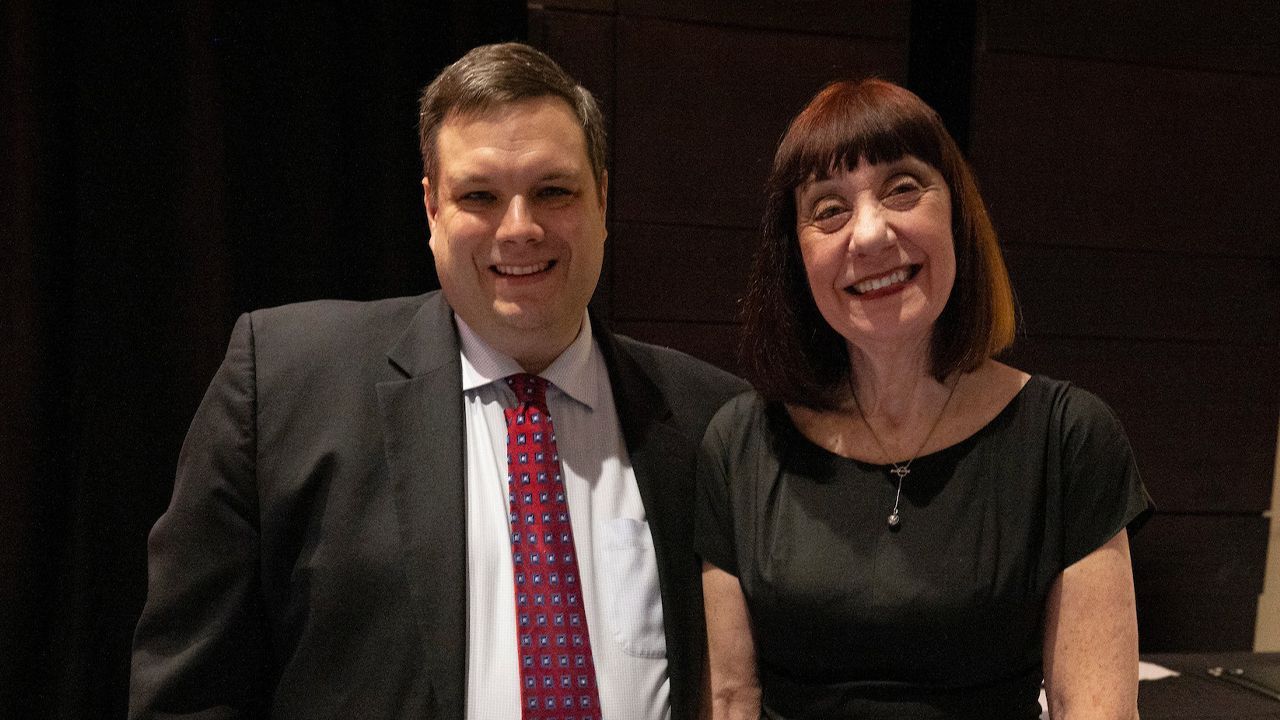
CUPRAP board members come and go, but Betty Hanson, has been the face of the organization forever. Since 2011, she has served as CUPRAP’s executive director, playing a leading role in planning and executing the annual Spring Conference, among other duties. Betty sat down recently with former CUPRAP President Tom Durso to chat about her involvement with the organization, her fondest memories, and her advice for new members. Note: This has been edited for space and clarity. TD: How did you get involved with CUPRAP in the first place? BH: I had not been working in higher education. My first job was at Philadelphia Magazine, and then I worked at two advertising agencies. Something came up at Widener, and I got a job there in the marketing department. My boss was just looking through professional development and said, “Well, maybe you should go to this conference and see how it is.” I got the job at Widener in ’86, so I guess this was in ’87 that I went to the first conference. I enjoyed it and have been a member ever since. TD: And when did you get involved in your current role as an administrator? BH: I was...
The post Celebrating Betty Hanson appeared first on CUPRAP.